

Urgent Care: From Gap Filler to Growth Engine
Urgent care is evolving into a core healthcare access point, driven by AI, digital intake, and expanded services shaping the next decade

Urgent Care: From Gap Filler to Growth Engine
Urgent care wasn’t built as a centerpiece of healthcare—it was built to solve a problem.
In the 1980s, as emergency departments became overcrowded and primary care access tightened, urgent care emerged as a practical alternative: walk-in access, extended hours, and lower costs. It was efficient, convenient, and—most importantly—necessary.
Fast forward to today, and urgent care is no longer a secondary option. It’s a critical access point, with over 15,000 centers nationwide and sustained double-digit growth.
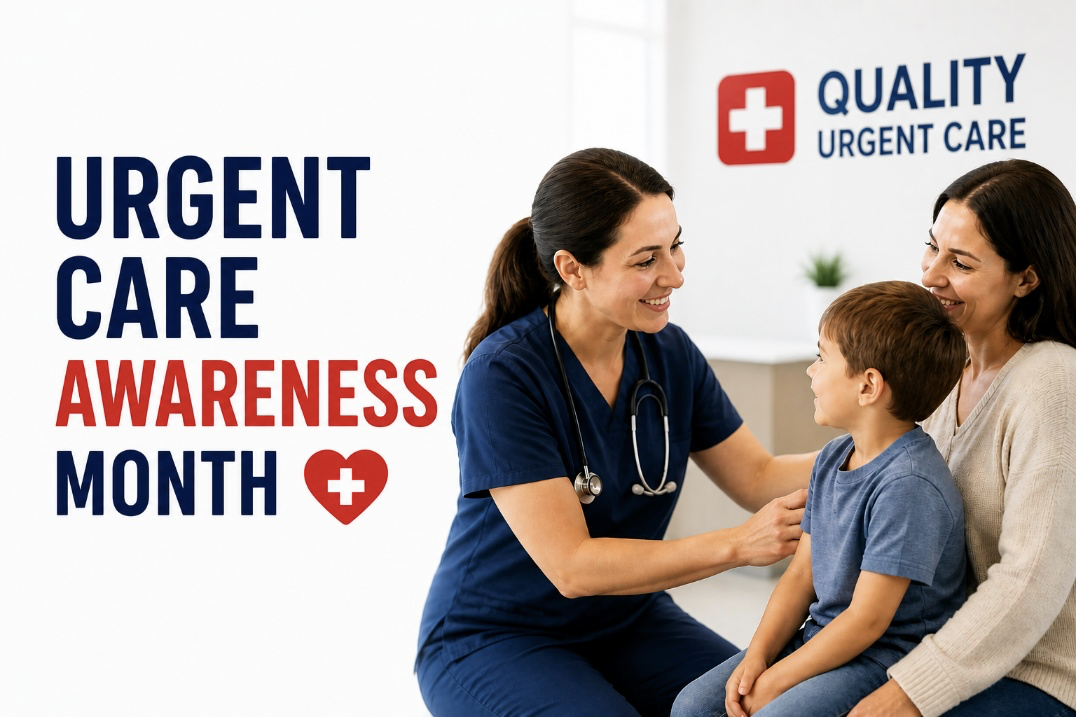
As we recognize Urgent Care Awareness month - the real story isn’t how urgent care got here.
It’s where the urgent care industry is going.
The Current State: Scaled, Stabilized, and Ready for Reinvention
Urgent care has matured into a high-functioning segment of outpatient care, driven by:
- Consumer demand for on-demand access
- Cost pressures shifting care out of hospitals
- Private equity and health system investment
- Expanded service lines and operational sophistication
What was once a fragmented model is now a scalable, systematized delivery channel.
And yet—despite this maturity—the next decade represents a major inflection point.
The Next 10 Years: 5 Forces That Will Redefine Urgent Care
1. The “Front Door” Becomes Permanent
Urgent care is evolving into the first stop in the patient journey, not a fallback.
Expect expansion into:
- Primary care adjacency
- Chronic condition touchpoints
- Care navigation and referral management
2. AI Will Reshape the Visit—End to End
Artificial intelligence is moving from novelty to necessity.
Over the next decade:
- Documentation becomes ambient and automated
- Coding becomes more accurate and defensible
- Clinical decision support becomes real-time
The net result: less friction, more throughput, stronger revenue integrity.
3. Digital Intake Becomes the Default Experience
The patient visit will begin long before the patient walks in.
Key shifts:
- Mobile-first registration
- Self-scheduling and real-time booking
- Automated eligibility and cost transparency
Access will be defined by speed, simplicity, and visibility.
4. Scale Is Evolving—But So Is the Opportunity for Independent Operators
Growth in multi-site platforms is reshaping the landscape—but it’s also creating a clear playbook that independent centers can leverage.
This brings:
- More standardized workflows that can be adopted at any size
- Greater access to tools for reporting and revenue cycle optimization
- A renewed focus on efficiency and patient experience as competitive advantages
For single-site operators, this isn’t about competing on size—it’s about competing on agility, personalization, and operational clarity.
In many cases, independent centers are uniquely positioned to move faster, adapt quickly, and deliver a more connected patient experience.
Operational discipline isn’t just a differentiator—it’s an opportunity to outperform.
5. Scope of Care Will Expand
Urgent care is already stretching beyond episodic treatment.
Next phase growth includes:
- Occupational medicine
- Preventive services
- Higher-acuity case management
The model is shifting toward a hybrid outpatient hub.
The Strategic Reality: Growth Alone Isn’t Enough
The next decade will reward operators who move beyond volume.
Emerging expectations:
- Demonstrated outcomes and quality metrics
- Revenue optimization without added administrative burden
- Seamless integration with the broader healthcare ecosystem
In short, urgent care must evolve from fast care to smart care.
Where UrgentIQ Fits In
As urgent care evolves, the underlying technology must keep pace.
UrgentIQ is designed around a simple principle:
Reduce friction everywhere it exists—clinical, operational, and financial.
- AI-powered documentation, coding, and discharge
- Patient-led intake and scheduling
- Real-time eligibility and revenue visibility
- Unified EMR + practice management in a single platform
The goal isn’t just efficiency.
It’s creating a system where providers can focus on care, operators can scale confidently, and revenue flows without unnecessary barriers.
Final Thought
Urgent care started as a workaround.
Over the next 10 years, it becomes infrastructure.
The organizations that succeed will be those that embrace this shift early—leveraging technology, optimizing workflows, and positioning urgent care not just as a service line, but as the front door to modern healthcare.
If your urgent care operation is preparing for the next phase of growth—or feeling the strain of outdated systems—connect with us at sales@urgentiq.com to see how a purpose-built platform can streamline operations, strengthen revenue performance, and position your organization for 2026 and beyond.

More blog posts to read


Prefer to send an email? Send us your request at sales@urgentiq.com, and we'll coordinate with you directly.
