

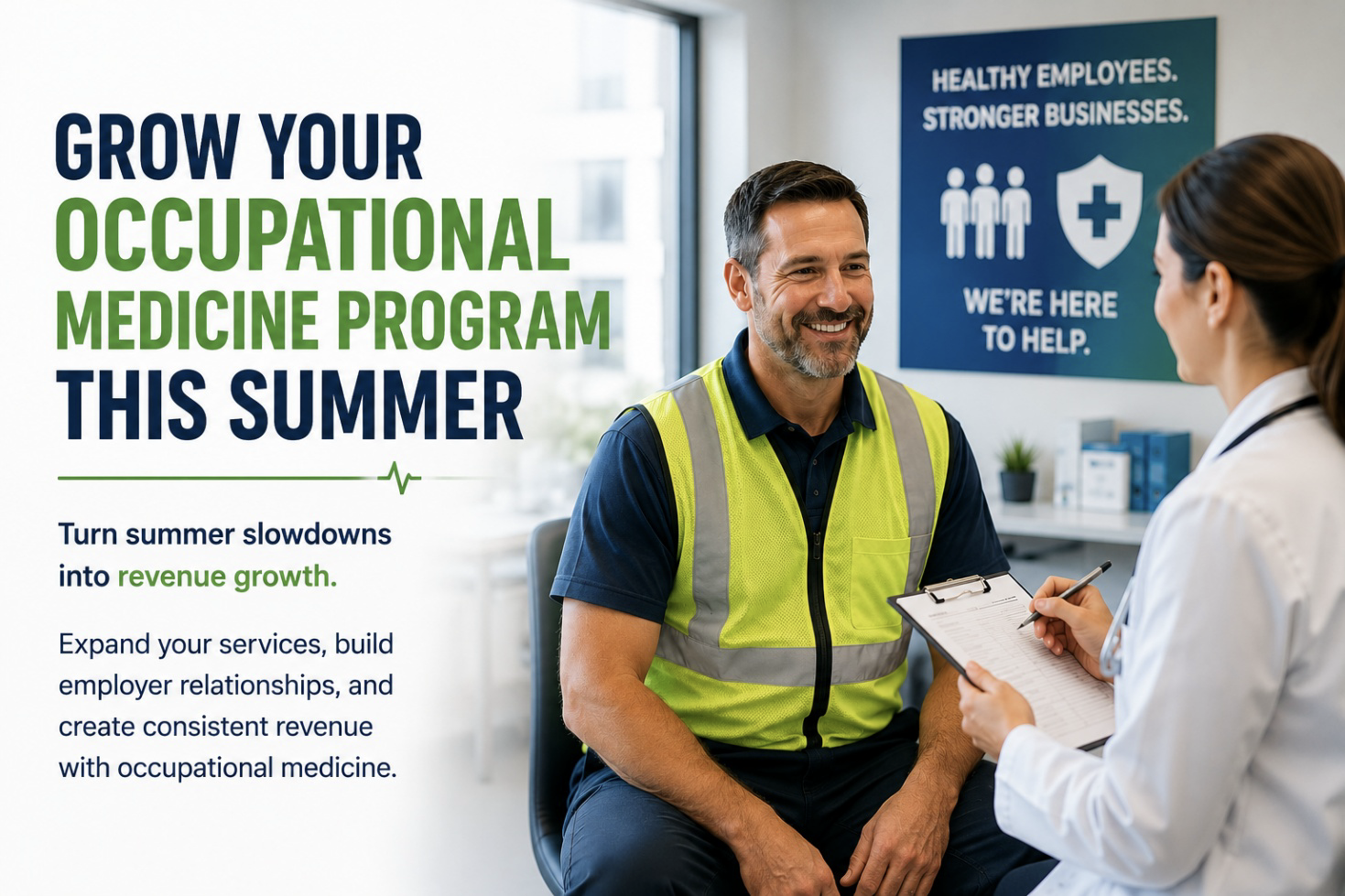
Why Occupational Medicine Makes Sense for Urgent Care
Discover how occupational medicine services can help urgent care centers generate consistent summer revenue.

Why Occupational Medicine Makes Sense for Urgent Care
Urgent care and occupational medicine are natural partners.
Most urgent care centers already possess the clinical expertise, staffing, equipment, and operating hours needed to support employer healthcare needs. In many cases, expanding occupational medicine services requires little additional investment while creating substantial new revenue opportunities.
Common occupational medicine services include:
- DOT Physicals
- Non-DOT Physicals
- Pre-Employment Examinations
- Drug and Alcohol Testing
- Workers' Compensation Care
- Respirator Clearance Exams
- Return-to-Work Evaluations
- Injury Treatment and Follow-Up
- Vaccination Programs
- OSHA-Required Testing
These services often command predictable reimbursement rates and can generate repeat business from employers throughout the year.
Why Summer Is the Ideal Time to Expand
Employers Are Hiring
Many industries experience peak hiring during the summer months.
Construction companies, landscaping firms, transportation providers, manufacturing organizations, municipalities, and seasonal employers frequently increase staffing levels during this time. Every new hire represents a potential opportunity for pre-employment physicals, drug screening, and occupational health services.
Clinics that proactively engage local employers during this hiring cycle can establish relationships that continue generating revenue for years.
Staff Have More Capacity
When urgent care volumes decrease, providers and staff often have additional bandwidth.
Rather than viewing reduced patient volumes as a negative, successful operators use this time to:
- Meet with local employers
- Develop occupational medicine marketing materials
- Train staff on employer workflows
- Review pricing and service offerings
- Build referral relationships
The groundwork established during the summer can produce substantial returns during the busier fall and winter seasons.
Construction Season Drives Demand
Summer is peak construction season in many markets. Don’t just think of construction as carpentry or new housing starts – although this is very true and includes all of the trades such as electrical, plumbing, HVAC, and roofing. Construction can also include those businesses involved in road/highway improvements, excavation contractors, utility contractors, and even trucking/transportation firms that support these businesses.
These companies frequently require:
- DOT certifications
- Workers' compensation treatment
- Return-to-work evaluations
- Drug testing
- Injury management services
Building relationships with even a handful of local contractors can create a steady stream of occupational medicine visits throughout the year.
Other industries that often experience seasonal growth during the summer include landscaping and tree care companies, pest control providers, septic and environmental service contractors, quarries and aggregate operations, as well as large agricultural businesses.
These organizations frequently hire seasonal workers, operate heavy equipment, and maintain ongoing occupational health needs, making them excellent targets for employer outreach and occupational medicine services. As you develop your summer marketing strategy, be sure to include these often-overlooked opportunities.
Workers' Compensation: A Major Revenue Opportunity
Many urgent care centers underestimate the value of workers' compensation services.
Work-related injuries often require:
- Initial evaluations
- Follow-up visits
- Imaging
- Splinting and bracing
- Physical therapy referrals
- Return-to-work assessments
These cases can generate significantly more revenue than a single episodic urgent care visit while creating strong employer relationships.
The key is providing employers with prompt communication, efficient reporting, and timely work-status documentation.
Building Employer Relationships
The most successful occupational medicine programs focus on relationships, not transactions.
Employers want healthcare partners who can:
- Reduce employee downtime
- Improve workforce productivity
- Communicate effectively
- Provide fast access to care
- Help navigate workplace injuries
Consider meeting with:
- Human Resource Managers
- Safety Directors
- Operations Leaders
- Business Owners
- Transportation Companies
- Staffing Agencies
Many employers already have healthcare vendors but remain open to alternatives that provide better service and responsiveness.
Technology Can Be a Competitive Advantage
Modern urgent care technology can significantly enhance occupational medicine programs.
Features such as:
- Online scheduling
- Digital forms
- Real-time eligibility verification
- Automated reporting
- AI-assisted documentation
- Employer portals
can improve efficiency while reducing administrative burdens for both employers and clinic staff.
And don’t forget – prompt and simplified invoicing with competitive rates.
Employers increasingly expect healthcare partners to deliver a streamlined experience that mirrors other modern business services.
Measuring Success
As you expand occupational medicine services, track key performance indicators including:
- Number of active employer accounts
- Occupational medicine visits per month
- Workers' compensation case volume
- Average revenue per occupational medicine visit
- Employer retention rates
- New employer acquisitions
Even modest growth in these areas can create meaningful financial impact over time.
Final Thoughts
Summer slowdowns don't have to translate into declining revenue.
In fact, they can provide the perfect opportunity to strengthen your business by expanding occupational medicine services. By building employer relationships, promoting workplace health programs, and leveraging existing clinical capabilities, urgent care centers can create a more diversified and resilient revenue model.
The clinics that use summer strategically often enter the fall season with stronger employer partnerships, increased patient volume, and a healthier bottom line.
If your urgent care center has been considering expanding occupational medicine services, there may be no better time than now. For questions or additional information, contact sales@urgentiq.com.

More blog posts to read


Prefer to send an email? Send us your request at sales@urgentiq.com, and we'll coordinate with you directly.
